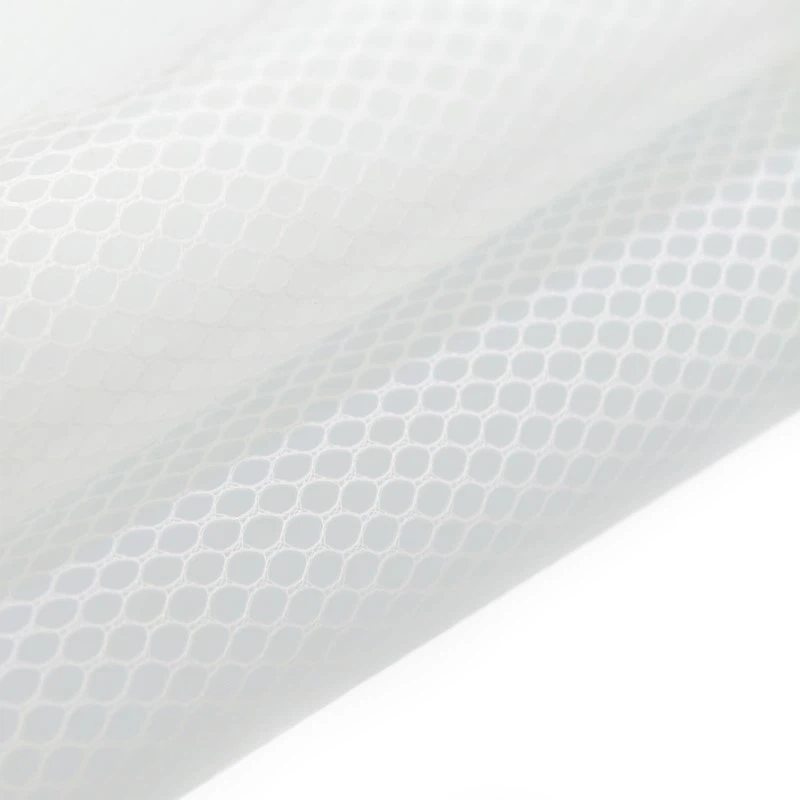
EVA fabric with mesh is a porous or mesh-like film material made mainly from ethylene-vinyl acetate copolymer (EVA). It features waterproofing, moisture resistance, light weight, softness, low-temperature durability, and easy processing. It is commonly used in stationery bags, tool bags, package linings, outdoor products, and other applications.
Material Selection and Specification
Thickness suitable for application: Common thickness is 0.45mm (as shown in example 2), suitable for stationery bags and tool bags; thicker specifications can be used for heavy-duty protection or floor mats.
Colors and textures: Offers a variety of surface treatments such as transparent, iridescent, mirror, and fabric-like, selectable according to design needs.
Environmental certification: Ensure the product meets ROHS, REACH, and other standards, especially for children's products or food-related packaging.
Processing and Cutting Tips
Use sharp knives or laser cutting: EVA mesh fabric is soft but tough; regular scissors may cause rough edges. It is recommended to use a craft knife, rotary cutter, or laser cutting machine for smooth cuts.
Heat-seal edges to prevent fraying: For high-frequency use scenarios (such as bags), you can slightly fuse the edges using a heat gun or iron (with silicone paper as a pad) to prevent mesh tear.
Avoid excessive stretching: Although EVA is elastic, over-stretching may cause permanent deformation. Maintain moderate tension during sewing or gluing.
Adhesion and Lamination Recommendations
Prefer specialized EVA glue or hot melt adhesive: Ordinary white glue has weak bonding; it is recommended to use EVA-based hot melt glue or double-sided tape (e.g., 3M VHB) to ensure strong adhesion.
Control temperature during lamination: When combining with other materials (such as non-woven fabric or cloth), the heating temperature is recommended to be controlled within 80–100℃ to prevent EVA from melting or deforming at high temperature.
Suitable for ultrasonic welding: For mass production, ultrasonic welding can achieve seamless, high-strength bonding.