

Hey there! As an antistatic PVC supplier, I get asked a lot about whether antistatic PVC has good mechanical strength. It's a crucial question, especially for those who are looking to use this material in various applications. So, let's dive right in and explore this topic.
First off, let's understand what antistatic PVC is. Antistatic PVC is a type of polyvinyl chloride that has been treated or formulated to prevent the buildup of static electricity. This is super important in many industries, like electronics manufacturing, where static can damage sensitive components. But when it comes to mechanical strength, we need to look at a few different aspects.
Tensile Strength
Tensile strength is how much a material can be pulled before it breaks. Antistatic PVC generally has a decent tensile strength. It can withstand a fair amount of pulling force without tearing. This is great for applications where the material needs to be stretched or pulled, like in Clear PVC Film Roll. These film rolls are often used for packaging or covering items, and they need to be able to hold up under some tension.
The way the antistatic additives are incorporated into the PVC doesn't usually significantly reduce the base material's tensile strength. In fact, in some cases, the additives can even enhance the overall durability of the PVC. However, it's important to note that the exact tensile strength can vary depending on the specific formulation of the antistatic PVC.
Impact Resistance
Another key aspect of mechanical strength is impact resistance. How well does the material hold up when it's hit or bumped? Antistatic PVC has a good level of impact resistance. It can absorb a certain amount of shock without cracking or breaking. This makes it suitable for applications where there's a risk of impact, such as in Black PVC Grid Curtain. These curtains are often used in industrial settings, where they might get knocked around by equipment or workers.
The structure of the PVC itself, along with the antistatic treatment, contributes to its impact resistance. The polymer chains in PVC are arranged in a way that allows them to absorb and distribute the energy from an impact. And the antistatic additives can sometimes act as a sort of reinforcement, further improving the material's ability to withstand impacts.
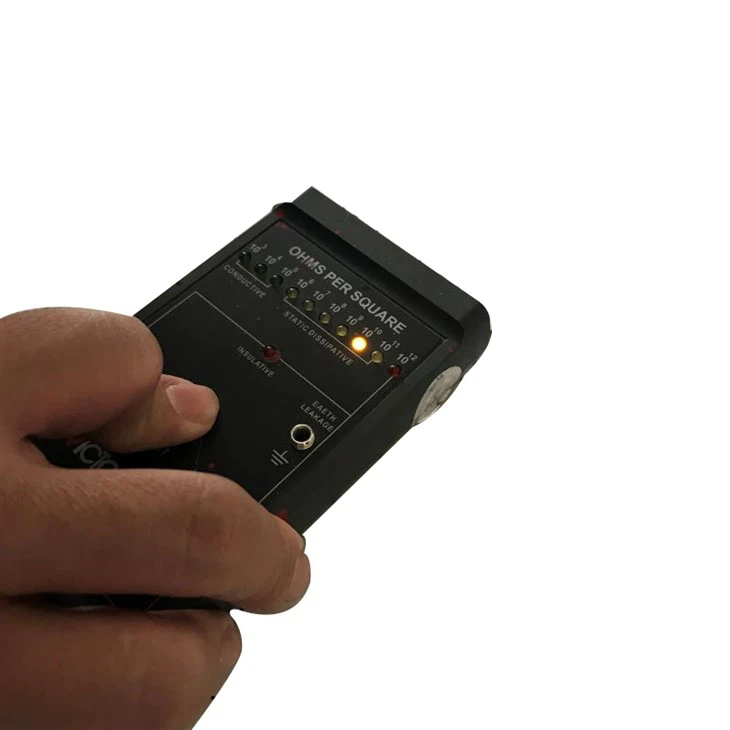

Flexural Strength
Flexural strength refers to how well a material can bend without breaking. Antistatic PVC is quite flexible, which is a big advantage in many applications. It can be bent and shaped easily without losing its integrity. This is useful for products like Double - Sided PVC ESD Curtain. These curtains need to be able to flex as they're opened and closed, and antistatic PVC can handle this kind of repeated bending without cracking.
The flexibility of antistatic PVC also makes it easier to install. You can cut it to the right size and shape, and it will conform to different surfaces. This is a major plus for customers who need a material that's easy to work with.
Factors Affecting Mechanical Strength
Of course, there are some factors that can affect the mechanical strength of antistatic PVC. One of the main factors is the quality of the raw materials used. If low - quality PVC resin is used, the overall mechanical strength will be lower. The manufacturing process also plays a role. If the antistatic additives aren't mixed properly with the PVC, it can lead to uneven distribution and potentially weaken the material.
The environmental conditions can also have an impact. For example, extreme temperatures can cause the PVC to become more brittle or soft, which can affect its mechanical properties. High humidity can also have an effect on the material's performance over time.
Comparing with Other Materials
When we compare antistatic PVC with other materials, it holds up pretty well in terms of mechanical strength. For instance, compared to some types of plastics, antistatic PVC has better tensile and impact resistance. It's also more flexible than many rigid plastics. However, it might not be as strong as some metals in terms of sheer strength. But in applications where weight, flexibility, and antistatic properties are important, antistatic PVC is a great choice.
Real - World Applications
In real - world applications, the mechanical strength of antistatic PVC is put to the test every day. In the electronics industry, as I mentioned earlier, it's used to protect sensitive components from static. The fact that it has good mechanical strength means that it can be used in packaging that will withstand the rigors of shipping and handling.
In cleanrooms, antistatic PVC curtains are used to create barriers. These curtains need to be able to withstand the movement of people and equipment, and their mechanical strength ensures that they can do this effectively.
Conclusion
So, to answer the question “Does antistatic PVC have good mechanical strength?” the answer is yes. It has decent tensile strength, good impact resistance, and high flexural strength. Of course, the exact mechanical properties can vary depending on factors like the raw materials, manufacturing process, and environmental conditions.
If you're in the market for antistatic PVC products, whether it's Clear PVC Film Roll, Black PVC Grid Curtain, or Double - Sided PVC ESD Curtain, I'd love to have a chat with you. We can discuss your specific needs and find the right antistatic PVC solution for you. Don't hesitate to reach out for a procurement discussion.
References
- ASTM International standards on PVC materials
- Industry reports on antistatic plastics
- Technical data sheets from PVC manufacturers