

What is the Hardness of Anti Statistic Mat?
As a supplier of anti - static mats, I've often been asked about the hardness of these mats. Understanding the hardness of anti - static mats is crucial as it directly impacts their performance, durability, and suitability for different applications.
Defining Hardness in Anti - Statistic Mats
Hardness in anti - static mats refers to the material's resistance to indentation or deformation. It is a key property that determines how well the mat can withstand the pressure exerted on it during normal use. The hardness of anti - static mats is typically measured using the Shore durometer scale. This scale provides a numerical value that indicates the material's hardness, with higher numbers representing harder materials.
There are two main types of Shore durometer scales commonly used for measuring the hardness of anti - static mats: Shore A and Shore D. The Shore A scale is used for softer materials, such as rubber and some types of plastics, while the Shore D scale is used for harder materials, like rigid plastics.
Factors Affecting the Hardness of Anti - Statistic Mats
Several factors can influence the hardness of anti - static mats. One of the primary factors is the material composition. Anti - static mats can be made from a variety of materials, including rubber, vinyl, and foam. Each material has its own inherent hardness characteristics.
For example, rubber anti - static mats can have a wide range of hardness levels depending on the type of rubber used and the manufacturing process. Natural rubber mats tend to be softer and more flexible, while synthetic rubber mats can be engineered to have different hardness levels. Vinyl anti - static mats are generally harder and more rigid than rubber mats, making them suitable for applications where a more stable surface is required.
The manufacturing process also plays a significant role in determining the hardness of anti - static mats. During the production process, additives and fillers can be incorporated into the material to modify its hardness. For instance, adding a certain amount of plasticizer to a vinyl mat can make it softer and more flexible, while adding a hardening agent can increase its hardness.
Another factor that can affect the hardness of anti - static mats is the environmental conditions. Temperature and humidity can cause the material to expand or contract, which in turn can change its hardness. For example, in cold temperatures, the material may become harder and more brittle, while in hot and humid conditions, it may become softer and more pliable.
Importance of Hardness in Different Applications
The hardness of anti - static mats is an important consideration in various applications. In industrial settings, where heavy equipment and machinery are used, a harder anti - static mat is often preferred. A hard mat can better withstand the weight and pressure of the equipment, preventing it from deforming or wearing out quickly. This is especially important in areas where workers are moving heavy objects or where there is a lot of foot traffic.
On the other hand, in office or laboratory environments, a softer anti - static mat may be more suitable. A soft mat provides a more comfortable surface for workers to stand on for long periods of time. It can also help reduce fatigue and prevent injuries. Additionally, in some electronic manufacturing processes, a softer mat may be required to prevent damage to delicate components.
Measuring the Hardness of Anti - Statistic Mats
To accurately measure the hardness of anti - static mats, a Shore durometer is used. This device consists of a spring - loaded indentor that is pressed into the material. The depth of the indentation is then measured and converted into a hardness value on the Shore scale.
When measuring the hardness of an anti - static mat, it is important to follow the proper procedures. The mat should be placed on a flat, hard surface, and the durometer should be pressed perpendicular to the surface of the mat. Multiple measurements should be taken at different locations on the mat to ensure an accurate average hardness value.
Our Product Range and Hardness Options
As a supplier of anti - static mats, we offer a wide range of products with different hardness levels to meet the diverse needs of our customers. Our rubber anti - static mats come in various Shore A hardness values, from soft and flexible options for comfort - oriented applications to harder ones for heavy - duty industrial use.
Our vinyl anti - static mats are available in different Shore D hardness levels, providing a stable and durable surface for high - traffic areas. We also offer foam anti - static mats, which are typically softer and more lightweight, making them ideal for applications where a cushioned surface is required.
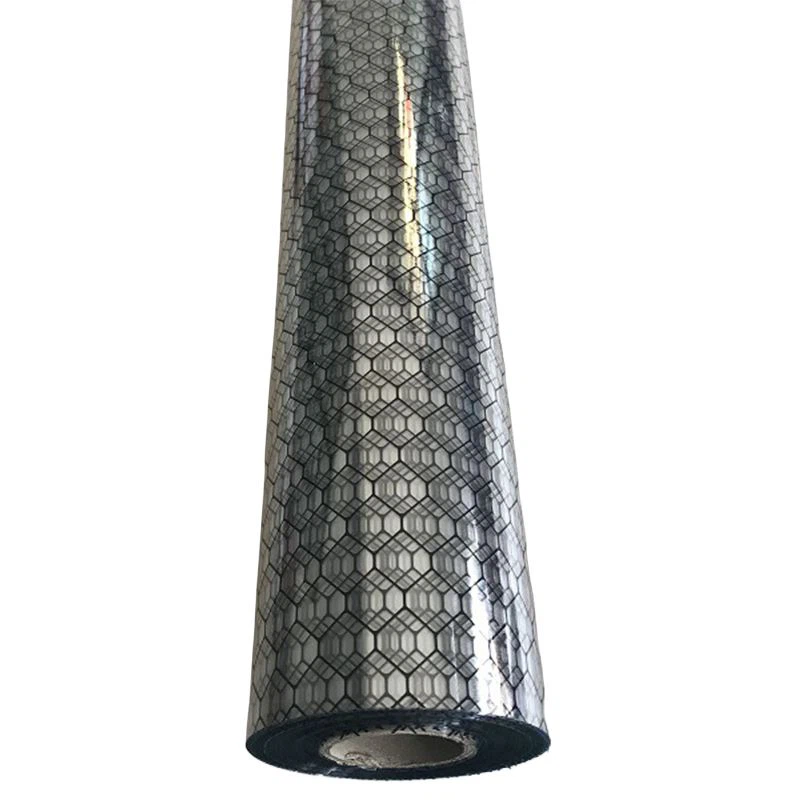
In addition to anti - static mats, we also supply related products such as ESD PVC Grid Curtain, Double - Sided PVC ESD Curtain, and PVC Coated Mesh Fabric. These products are designed to work in conjunction with our anti - static mats to create a comprehensive anti - static environment.
Choosing the Right Hardness for Your Needs
When choosing an anti - static mat, it is important to consider the specific requirements of your application. If you are using the mat in an industrial setting with heavy equipment, a harder mat with a higher Shore D or Shore A value may be more appropriate. If you are using the mat in an office or laboratory environment, a softer mat with a lower Shore A value may be a better choice.
It is also important to consider the expected lifespan of the mat. A harder mat is generally more durable and can withstand more wear and tear, but it may be less comfortable to stand on for long periods of time. A softer mat, on the other hand, may be more comfortable but may not last as long in high - traffic areas.
Conclusion
The hardness of anti - static mats is a critical property that affects their performance, durability, and suitability for different applications. By understanding the factors that influence hardness and how to measure it, you can make an informed decision when choosing an anti - static mat for your needs.
If you are interested in purchasing anti - static mats or any of our related products, we invite you to contact us for a detailed discussion. Our team of experts is ready to help you select the right product with the appropriate hardness level for your specific application.
References
- ASTM D2240 - Standard Test Method for Rubber Property - Durometer Hardness.
- ISO 868 - Plastics and ebonite - Determination of indentation hardness by means of a durometer (Shore hardness).